

Live-In Caregiving Explained
Introduction to Live-In Caregiving
As the population ages, many older adults express a strong desire to remain in their homes, a concept known as 'aging in place.' The role of a live-in caregiver has thus emerged as a significant option to fulfill this aspiration, offering a blend of personal engagement and professional care that can enhance the quality of life for seniors.
The Role of Live-In Caregivers
Definition and duties of live-in caregivers
Live-in caregivers are professional aides who reside in the home of an older adult to provide personal and health-related support. Their responsibilities include assisting with daily living activities such as bathing, dressing, meal preparation, light housekeeping and medication reminders. Additionally, they offer companionship to reduce feelings of isolation and can be vital in monitoring health conditions, providing emergency support,
Differences between live-in and 24-hour care
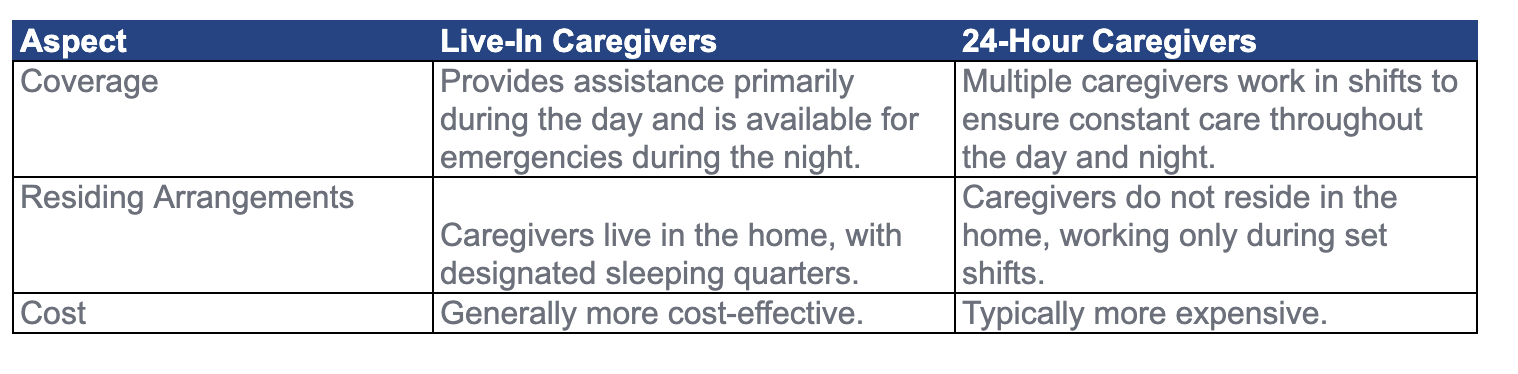
Both live-in and 24-hour care provide important support, but they differ in significant ways:
Personalized care plans
Creating a personalized care plan is essential in live-in care. Caregivers collaborate with the individual and their family to tailor support to meet specific needs such as health management, nutrition, and daily activities. This individualized approach helps manage their conditions and maintain independence at home.
Do live-in caregivers sleep?
Yes, live-in caregivers sleep! They are provided with private sleeping quarters to ensure they have a space to rest. Caregivers generally alternate shifts and must have designated breaks during the night to sleep and to recharge during the day as well. However, the amount of sleep they get can vary depending on the needs of the client and any emergency situations that may arise. It is essential for caregivers to get adequate rest to provide proper care and support to their clients.
Benefits of Live-In Care
What are the benefits of hiring a live-in caregiver?
Hiring a live-in caregiver offers numerous benefits allowing them to maintain their independence and make personal choices about daily activities. This autonomy is essential for mental well-being, enabling those to engage in familiar routines and maintain their lifestyle in a comfortable setting.
Remaining in familiar surroundings can also significantly reduce stress, especially for those with cognitive conditions like dementia, who thrive in a stable environment. The presence of a live-in caregiver supports personal routines and encourages participation in preferred activities, leading to better physical health and emotional stability.
Additionally, live-in caregivers can help couples stay together, preserving their emotional bond during challenging health situations. This companionship can be invaluable as it allows partners to support each other, fostering a sense of normalcy and connection as they navigate aging together.
How is live-in care cost-effective compared to assisted living?
Live-in care can be more cost-effective than assisted living. With a single fee covering tailored personal care at home, families often find this option to be financially advantageous—especially for couples needing care. While assisted living communities often charge per person, live-in caregivers provide comprehensive support without the overhead of a facility.
What are the emotional and social benefits of live-in care?
The emotional and social benefits of having a live-in caregiver cannot be overstated. Regular interaction with caregivers helps diminish feelings of loneliness and isolation that many seniors face. Companionship and consistent support enhance socialization, which is crucial for mental well-being.
Furthermore, having someone available around the clock means quicker response times during emergencies, which can significantly reduce anxiety for both seniors and their families. Thus, live-in care enables older adults to enjoy the comfort of home with the necessary support for their emotional and social health, while also addressing practical needs.
Aging in Place with a Live-In Caregiver
What are the benefits of aging in place with a live-in caregiver?
Aging in place with a live-in caregiver offers numerous advantages, primarily fostering independence and autonomy in a familiar environment. Here are some of the key benefits:
Maintaining Social Connections
Living at home allows older adults to keep their established social networks intact, which is vital for emotional support. Regular visits and interactions with friends and family can significantly reduce loneliness and feelings of isolation. Additionally, the live-in caregiver often serves as a companion, providing social engagement and interaction, further enriching the older adult's daily life.
Preserving Mental Health
Remaining in a familiar environment positively impacts mental well-being, especially for seniors facing cognitive challenges like Alzheimer’s disease. Being in a known setting helps reduce confusion and disorientation, contributing to a more stable emotional state. Live-in caregivers not only assist with necessary tasks but also engage in conversation and activities that stimulate cognitive function and foster a sense of purpose.
Safety and Security at Home
Safety is paramount for aging adults, and live-in caregivers enhance home safety through daily observations. They can make immediate adjustments to the environment to mitigate risks, such as removing tripping hazards or ensuring proper lighting. Moreover, emergency medical alert systems can ensure quicker responses during crises, providing peace of mind for both the seniors and their families.
Reference: www.humancareny.com
